Don't Panic: Why Calm Beats Urgency
Your company isn't in wartime. But it's acting like it. Panic isn't speed. Calm, structured organizations move faster and last longer. Consistency compounds. That's how you win.
The Lie
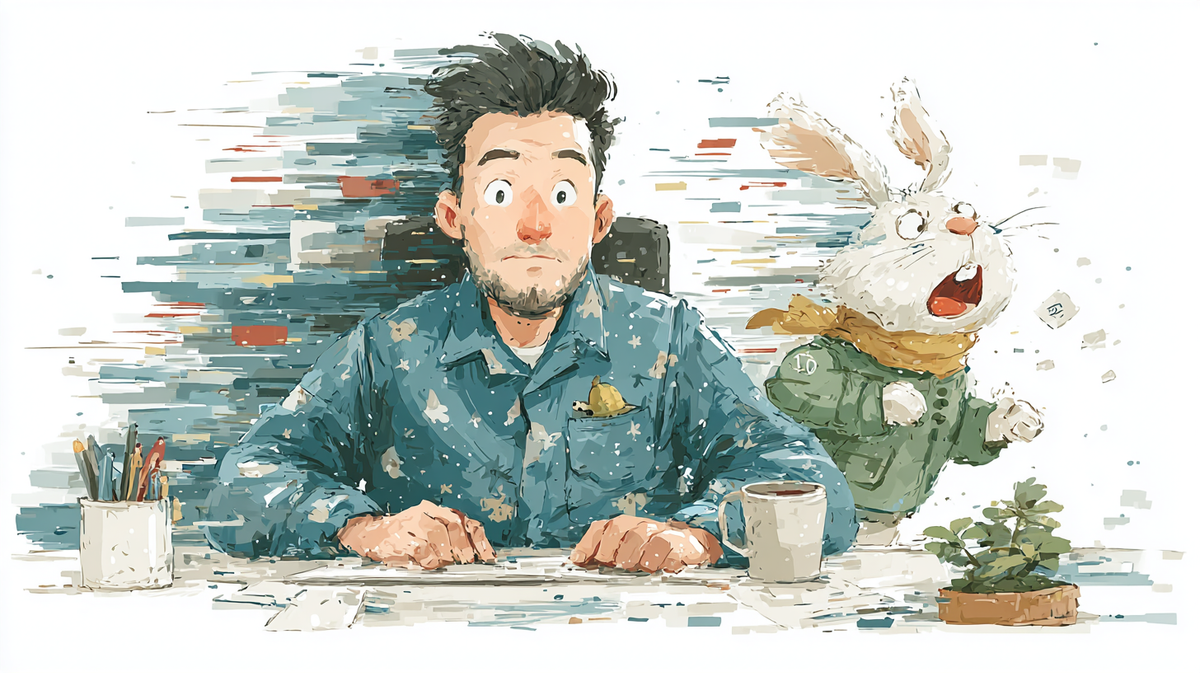
Your stable company—one with revenue, a foothold, a team—is acting like it's in crisis.
That's the lie you're living.
It feels like wartime. Everything is urgent. Every decision needs approval. Every issue escalates. You can't think beyond next week.
So you respond the way you think you should in wartime: You optimize for speed over structure. You reward visible intensity.
And you get slower.
Real Wartime vs. Performing Wartime
Real wartime is rare. Existential threat. The company might not exist in six months.
Most 5-50 person companies with revenue and a market foothold aren't in it.
But here's what I see: Organizations that perform wartime. Every quarter feels like emergency. Every week feels critical and comes with new priorities. Every person is needed for everything.
They call it "moving fast." They reward panic. They celebrate intensity.
But they're not actually moving fast. They're just moving frantically. And there's a difference.
Why Panic Looks Like Speed
Panic feels fast. It looks active. It feels urgent.
But panic prevents the things that actually make you fast:
- Clarity: You can't think strategically when you're in panic mode. So every decision is reactive.
- Coordination: You can't build systems that let people work independently. So everything requires senior judgment. So everything escalates.
- Learning: You're too busy to pause and ask "did that actually work?" So you never learn. You just keep doing the same things faster.
- Adjustment: You're moving too fast to change course. So you keep moving in the same direction even when it's wrong.
You optimize for activity instead of progress. You confuse motion with momentum.
The Paradox Nobody Talks About
Organizations with calm leadership and clear structure move faster than panicked ones.
They just don't look like it.
Why?
Because they've eliminated the friction.
When everyone knows what matters, decisions get made faster (not slower). When people understand the framework, they can move without constant approval. When you build systems that work, you scale without heroics.
The panicked org that's "moving fast" is actually coordinating through chaos. Everything requires escalation. Everything requires the senior person's judgment. Everything is slow.
The calm org that "looks slow" is actually coordinating through clarity. People move independently. Decisions are made fast. It compounds.
The Cost of Permanent Panic
If you're in constant wartime mode:
- People burn out. Humans can't sustain panic. They leave. Repeatedly.
- You never build anything. Structure requires time to think. You don't have that. So you're always firefighting.
- You hit a ceiling. You can't scale a panic-driven org. Everything depends on heroes and heroics.
- You optimize for the wrong things. You reward visible activity, not actual progress.
You look busy. You ship things. But you're not building something that lasts.
Why Calm Org Leaders Look Wrong
The leader of a calm, structured org doesn't look impressive.
They're not in every meeting. They're not solving every problem. They're not working 60-hour weeks. They don't make dramatic decisions.
They look... relaxed.
And that feels wrong to people who've been living in panic. "Shouldn't they be MORE stressed? Doesn't that mean they don't care?"
No. It means they built a system that doesn't require their personal heroics.
That's leadership.
Wartime vs. Peacetime
Here's the framework:
Wartime (rare): Existential threat. Company might not exist in six months. You focus everything on survival. You accept burnout and chaos as temporary. You'll rebuild systems when you survive.
Peacetime (most of the time): You have resources. You have time. You have breathing room. You build the structure and clarity that let you move fast sustainably.
The companies that confuse peacetime for wartime waste that breathing room on panic.
The companies that use peacetime to build structure can respond to real wartime when it happens. They have clarity. They have processes. They have mental capacity. They can surge.
Consistency Isn't Blind Repetition
But here's the important part: Consistency isn't about doing the same thing forever.
It's about building a sustainable practice, measuring if it's actually working, adjusting based on signals, then returning to consistency with the adjusted approach.
You need to know if your structure is actually making you faster:
Execution signals (is your process working?):
- How long from idea to shipped?
- How many replans and rewrites?
- Are estimates accurate?
Strategy signals (is your direction right?):
- Is the metric moving as expected?
- Did this unblock downstream work?
- Did this actually matter?
If the signals are bad, you adjust. Then you return to consistent practice with the adjustment.
This is how you move from "we're in panic mode" to "we're building something sustainable"—not by abandoning structure, but by measuring whether the structure is working, adjusting, and staying consistent with the improved version.
That's the discipline. That's how you compound.
- Ask yourself: Is this actually wartime? Do we need to exist in the next six months? If yes, panic is justified. If no, stop performing it.
- Build one thing. Not everything. One process, one clarity point, one system that removes a source of constant escalation.
- Protect sustainable pace. People work reasonable hours. You need them thinking, not just running.
- Measure progress, not activity. Not "how many hours did we work?" but "did we move closer to the vision?"
- Trust your team. If you've built clarity and structure, people can move without you.
The Companies That Win
The companies that are still growing fast in five years aren't the ones that optimized for panic.
They're the ones that built calm, clear organizations where people can move without heroics.
They don't look impressive in a standup. But they're the ones actually scaling.
Don't panic. Build structure. Move sustainably.
That's how you actually win.