The Research Paper That Explained 5 Years of Unease
I lived through founder-driven chaos without understanding why. Westrum's research explained it. Abrashoff's book showed me how to fix it. Now I help organizations escape.

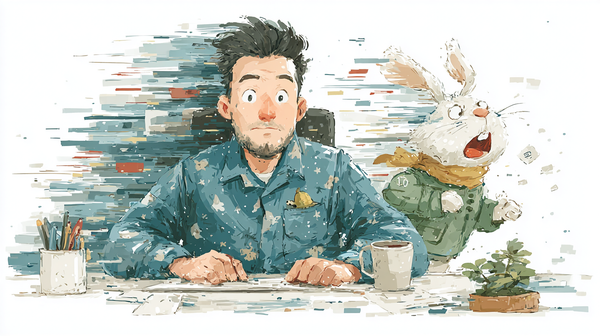
I was halfway through reading Ron Westrum's paper on organizational culture when I felt a chill run down my spine.
Not because the research was new. But because it finally gave me language for something I'd been unable to articulate for a decade: why one specific startup had drained me, why I couldn't wait to leave after the first year, and why it took me five years working elsewhere to understand what had actually happened.
The research was describing my past with uncanny accuracy.
And it took me years to find it.
The Startup (Anonymized)
It was early 2010s. Well-funded, some traction, talented engineers. By all external measures, it looked like it was building something.
But the structure inside was... not a structure.
What it actually looked like:
- The founder made every decision. All of them. He and one sidekick. Everything else had to wait for their approval. I was the technical lead, but I couldn't make technical decisions. I'd propose something and the founder would go ask another developer directly. Or ask someone on the other side of the planet (who dropped in code periodically, with no context of what we were actually doing).
- The plan changed weekly. There was no strategy. No North Star. Just the founder's latest thinking. Announcements would be made to the team before there was any actual plan to execute. Many things were announced and never happened.
- There was no product team. So "product" was just the founder making calls. There was no synthesis between business needs and technical constraints. Everything was reactive.
- I was constantly sidelined. As the technical lead, my job seemed to be getting overridden on a daily basis. The founder would go directly to other developers with requests, creating chaos in priorities. I had no actual authority.
- There was no plan for the work that actually mattered. Tasks got dropped into a Trello board. No structured planning. No OKRs. No vision. No milestones. Just "here's a task, do it." Foundational infrastructure, code quality, architecture—these were never discussed. Code was a commodity. Ship faster, always faster. The technical debt accumulated daily.
- The founder was always pacing, always on the phone, never actually present. When he was around, it was to make an immediate decision and move on. Never to think deeply about direction.
I left after 2 years. I couldn't articulate why at the time, but my gut was screaming: This is not sustainable.
What I didn't know was that everything I'd experienced was textbook dysfunction. I just didn't have the language for it yet.
The Discovery (Years Later)
I'd moved back to France. I was working with different companies, building a consulting practice. But that unease from the early startup had never quite left—a nagging question of "what was actually wrong there?"
Then, while reading the Google Cloud State of DevOps report (2023), I stumbled on Ron Westrum's research on organizational culture.
His framework of three culture types.
And everything crystallized.
The Paper That Explained It
Westrum's research gave me language for something I'd lived but never understood. His framework:
Pathological (Power-Oriented):
- Information is hoarded and weaponized
- Messengers are killed (blamed for bad news)
- Responsibility is shirked
- Bridging between functions is discouraged
- Failure is punished
- Outcomes: Low cooperation, messengers hide information, failures are concealed
Bureaucratic (Rule-Oriented):
- Information is carefully filtered
- Messengers are tolerated but not encouraged
- Responsibility is compartmentalized
- Bridging is tolerated but not encouraged
- Failure is punished according to rules
- Outcomes: Modest cooperation, information flows through channels, some failures are revealed
Generative (Mission-Oriented):
- Information flows freely
- Messengers are trained and valued
- Responsibility is shared
- Bridging is encouraged and rewarded
- Failure is treated as a learning opportunity
- Outcomes: High cooperation, good information flow, continuous learning
I read the descriptions of pathological culture and felt like someone had installed a camera in my old startup.
The "Aha" Moment (And The Chill)
I was reading through Westrum's framework when it hit me.
Not "oh, this explains what I experienced."
But: "Oh god. How close did I get to disaster?"
The dysfunction I'd lived through—the founder bottleneck, the constant chaos, no strategy, sidelined leadership, code as commodity—these aren't quirks. They're the precise conditions that lead to catastrophic failure.
I realized: that company could have imploded. Spectacularly. And I could have gone down with it.
But the real chill came next.
It wasn't just that one company.
I started noticing the pattern everywhere:
- Other startups operating the same way (founder in everything, no structure, founder burning out)
- Mid-size companies where executives are bottlenecks (everything requires their approval)
- Large organizations with dysfunctional departments (information hidden, messengers blamed)
- Government agencies with pathological cultures (I won't name them, but you know them)
- Countries where leadership operates this way (always making reactive decisions, no long-term vision, punishing messengers)
The pattern is everywhere.
Westrum's research showed me that pathological culture isn't rare. It's the default. Most organizations hover between pathological and bureaucratic. Generative cultures? Rare. Very rare.
That's the moment that got the chill up my spine.
Not recognition. But horror.
The realization that this dysfunction is so pervasive, so normalized, that most people don't even see it. They just think "that's how things work." They don't realize they're drowning in a system designed to hide information, punish honesty, and create constant chaos.
It's Lovecraftian, in a way. The silent horror of understanding that there are vast, broken systems lurking everywhere, and most people are just... living inside them. Not questioning. Not realizing they could be different.
That was the chill. Not that I experienced pathological culture.
But that pathological and bureaucratic are the default. Generative culture is the rare exception.
The People Still Inside
The other part of the horror: I know people who are still in those companies. Suffering the same confusion, the same exhaustion, the same "is this just how leadership works?" that I experienced.
I see them trapped in:
- Founder-bottleneck startups, slowly burning out
- Corporate departments where every decision escalates
- Organizations where you can't trust that information will be handled fairly
- Systems that punish honesty and reward self-protection
And they don't have the framework to understand it. They blame themselves. They think they're not resilient enough, not a good fit, not cut out for "real work."
They're drowning and don't realize they could breathe.
That's the part that hits hardest. The realization that Westrum's framework—this simple understanding of culture types—could have helped them see clearly. Could have helped them escape. Could have helped them make different choices.
Instead, they're living inside the pattern, normalizing the dysfunction, slowly internalizing the belief that this is just how things work.
From Diagnosis to Tools
Here's where it gets important: I didn't just sit with the horror.
I reached out to Westrum directly. Asked him about practical application. How do you actually shift a culture?
He pointed me to a book: "It's Your Ship" by David Abrashoff.
The research paper gave me language for what I'd experienced. I could finally name it: pathological culture, information hoarding, messengers killed, responsibility shirked.
But the book gave me something different. It gave me tools.
Abrashoff's story—taking command of a naval destroyer that was dysfunctional and transforming it into the best-performing ship in the fleet—showed me exactly what generative culture looks like in practice. And more importantly: how to build it.
The book showed me:
- How to create psychological safety so people bring you problems (not hide them)
- How to delegate real authority so people can move independently
- How to communicate direction clearly so people know what "winning" looks like
- How to treat failure as learning, not punishment
- How to build trust through consistent, transparent leadership
That's when the horror shifted. From "oh god, this is everywhere and nobody sees it" to "oh god, this is everywhere... and it can be fixed."
The Westrum research diagnosed my past. The Abrashoff book gave me a blueprint for a different future.
The Questions I Should Have Asked
If I'd had Westrum's framework before joining, here are the questions I would have asked in interviews (and really listened to the answers):
About information flow:
- "Tell me about a time you brought bad news to leadership. How did they respond?"
- "If I see a problem in a product decision, what's the process for raising it?"
- "How many surprises are there at board meetings, or do issues surface early?"
About messengers:
- "Tell me about someone who was wrong about something. What happened to them?"
- "If a project fails, what happens to the people who led it?"
About responsibility:
- "When something goes wrong, how do you figure out what happened and who learns from it?"
- "If engineering and product disagree, how do you decide?"
About bridging:
- "How well do engineering and product actually work together? Give me an example."
- "How often do different functions actually talk to each other?"
About failure:
- "Tell me about a project that got canceled or didn't work out. What did you learn? Is that person still here?"
- "What's your relationship with failure? Is it 'necessary learning' or 'career limiting'?"
The answers would have told me everything.
The Pattern I Now See
I left after 2 years. I trusted my gut enough to walk away.
But the confusion lasted much longer.
I spent years thinking the problem was:
- "Maybe I was too sensitive" (no, the system was genuinely unsafe)
- "Did I give up too early?" (no, my instinct was right)
- "That's just how startups work" (no, that's just how pathological cultures work)
What Westrum's research showed me: The culture type predicts outcomes more than individual talent.
You can have brilliant people in a pathological culture. But the culture prevents them from being brilliant. The system optimizes for self-protection, not for problem-solving. Information hides. Learning stops. People leave.
And if you leave without understanding why, you carry confusion for years.
Why This Matters Now
Understanding Westrum's framework changed what I do.
But it was Abrashoff's book that showed me how to actually change a culture.
I use both constantly in fractional VP work because I'm trying to do something specific: Help organizations shift away from pathological/bureaucratic cultures toward generative—and give them the tools to do it.
When I'm assessing an org, I'm not just looking for the signs of pathological culture:
- Does information flow freely? Or does bad news get killed?
- Are people protected for trying things? Or is failure reputational?
- Do people bridge across functions? Or do they silo?
- Is responsibility clear? Or is it murky?
- Is there actual strategy? Or is it constant chaos?
I'm also asking: Can this shift? And if so, what does the journey look like?
Because I've lived inside that darkness. And I know what it does to people.
But I also know—from Abrashoff—that it can change. That generative culture isn't a fairy tale. It's a deliberate choice. It takes clarity. It takes trust. It takes showing people you actually mean it.
My job is to help organizations make that shift before people like you—talented people with good instincts—have to escape. To help them build the clarity, the delegation, the transparency that makes generative culture possible.
It starts with diagnosis. But it ends with transformation.
The Question You Should Ask
If you're considering joining a company or working with a leadership team, ask yourself:
"Is this a generative culture, bureaucratic culture, or pathological culture?"
Ask the questions above. Listen carefully. Notice what's unsaid.
Because if it's pathological, no mission is compelling enough. No equity is enough. No talent is enough.
If you leave and you're confused about why you had to leave, that's not a character flaw. That's a sign the culture was pathological. And you were right to trust your gut.
The Silver Lining
Understanding Westrum's framework did something else: it showed me that culture is changeable.
You don't have to be stuck in pathological. You can shift toward generative.
That's what I help organizations do now—not through motivational speeches or team building.
But through:
- Creating clarity so information flows
- Protecting people for honest feedback
- Defining responsibility so people can move independently
- Encouraging bridging across functions
- Treating failure as learning
The moment you do those things, the culture shifts. People stay. Problems surface. Solutions get better.
The Chill Was Worth It
Looking back, the chill I felt reading Westrum's research was the chill of recognition.
But it was also the chill of relief: "Oh, there was nothing wrong with me. There was something wrong with the system. And systems can be fixed."
That research paper gave me language for something I'd lived but couldn't articulate.
It also gave me a framework for making sure I never built (or worked in) that kind of culture again.
If you're feeling unease about a company you're joining or working in, pay attention to that signal.
Ask the questions. Listen carefully.
You deserve to work somewhere that values honest information, treats failure as learning, and protects people for trying.
That's not idealistic. That's just generative culture.
And it works better. For everyone.
Ron Westrum's research paper: https://pmc.ncbi.nlm.nih.gov/articles/PMC1765804/
Accelerate State of DevOps 2023: https://services.google.com/fh/files/misc/2023_final_report_sodr.pdf
It's Your Ship, Captain D. Michael Abrashoff: https://www.goodreads.com/book/show/183392.It_s_Your_Ship